









Induction cooking has quickly emerged as one of the most searched and widely discussed kitchen technologies in the United States. Frequently referred to as the “magnetic cooktop revolution,” induction stoves provide faster cooking, greater energy efficiency, and a cleaner indoor environment than conventional gas or electric stoves. But how does an induction stove actually work?
Let’s explain the process in a clear, science-based way.
The Core Principle: Electromagnetism in Action
An induction cooktops operates through electromagnetic energy instead of using a direct flame or heated coil.
Located beneath the glass cooking surface is a tightly wound copper coil. As electricity passes through this coil, it produces a rapidly changing magnetic field above the cooktop.
This is where the key process begins.
When a compatible metal pan, typically cast iron or magnetic stainless steel, is placed on the cooktop, the magnetic field passes through the pan’s base and produces eddy currents within the metal.
These eddy currents are circular electrical currents that move rapidly throughout the cookware. Since the metal naturally resists the flow of these electrical currents, the energy is converted directly into heat within the pan itself.
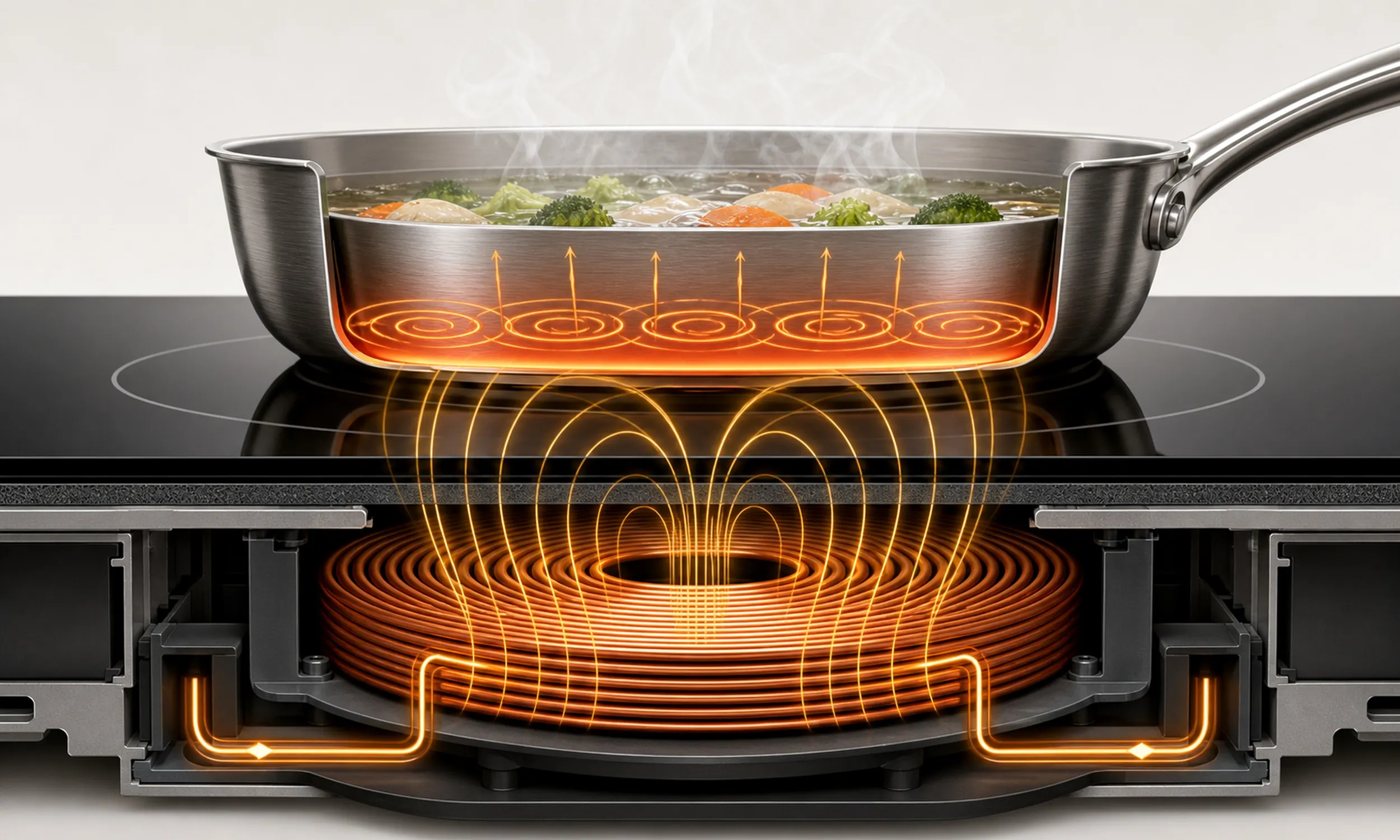
In simple terms:
Induction stoves do not primarily heat the cooktop surface — they heat the cookware directly.
Eddy Currents: The Science Behind Fast Heating
Eddy currents are the main mechanism that makes induction cooking possible.
You can picture them as tiny “swirling currents” moving inside the pan. As the magnetic field generated by the cooktop rapidly changes direction, it causes electrons within the metal to travel along circular paths.
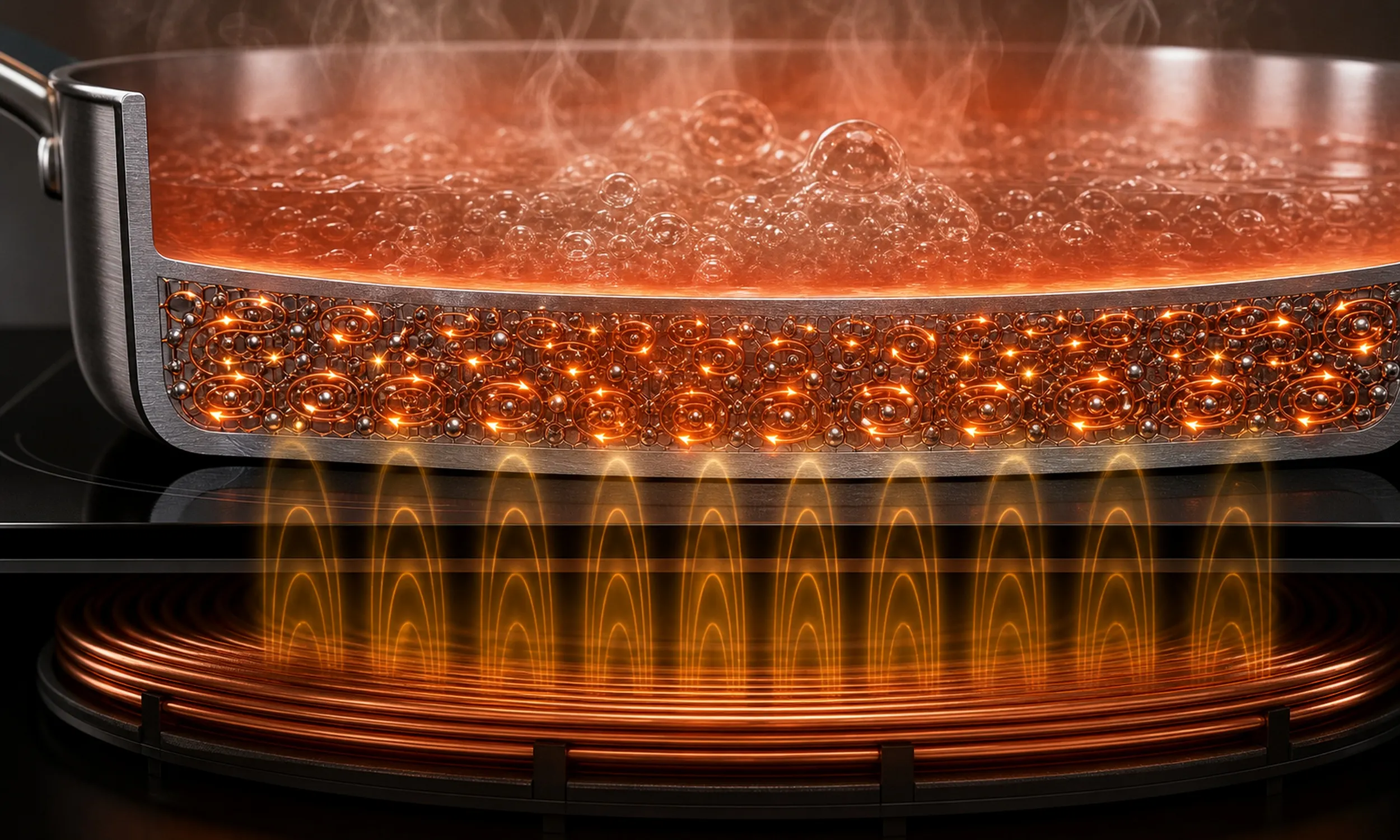
This continuous movement produces friction at the atomic level, and that friction is transformed into heat.
This is why induction cooktops can:
- Bring water to a boil extremely quickly
- React immediately to temperature adjustments
- Provide highly precise cooking control
Unlike traditional cooking methods, there is almost no “energy waiting time.” Heat is produced exactly where it is required — inside the cookware.
After examining forum discussions surrounding how induction cookers operate, several common questions have emerged that can provide a better understanding of their operating principle:
- Why does the cooktop surface not become particularly hot?
- Why do induction cookers require specific types of cookware?
- How do induction cookers differ from gas and electric stoves?
These questions all focus on one fundamental point: where does the heat originate, and how is that heat transferred?
Below, we will address each question individually based on consumer discussions.
Why the Cooktop Surface Stays Relatively Cool
One of the most frequently asked questions from consumers is: Why doesn’t the stove surface become extremely hot?
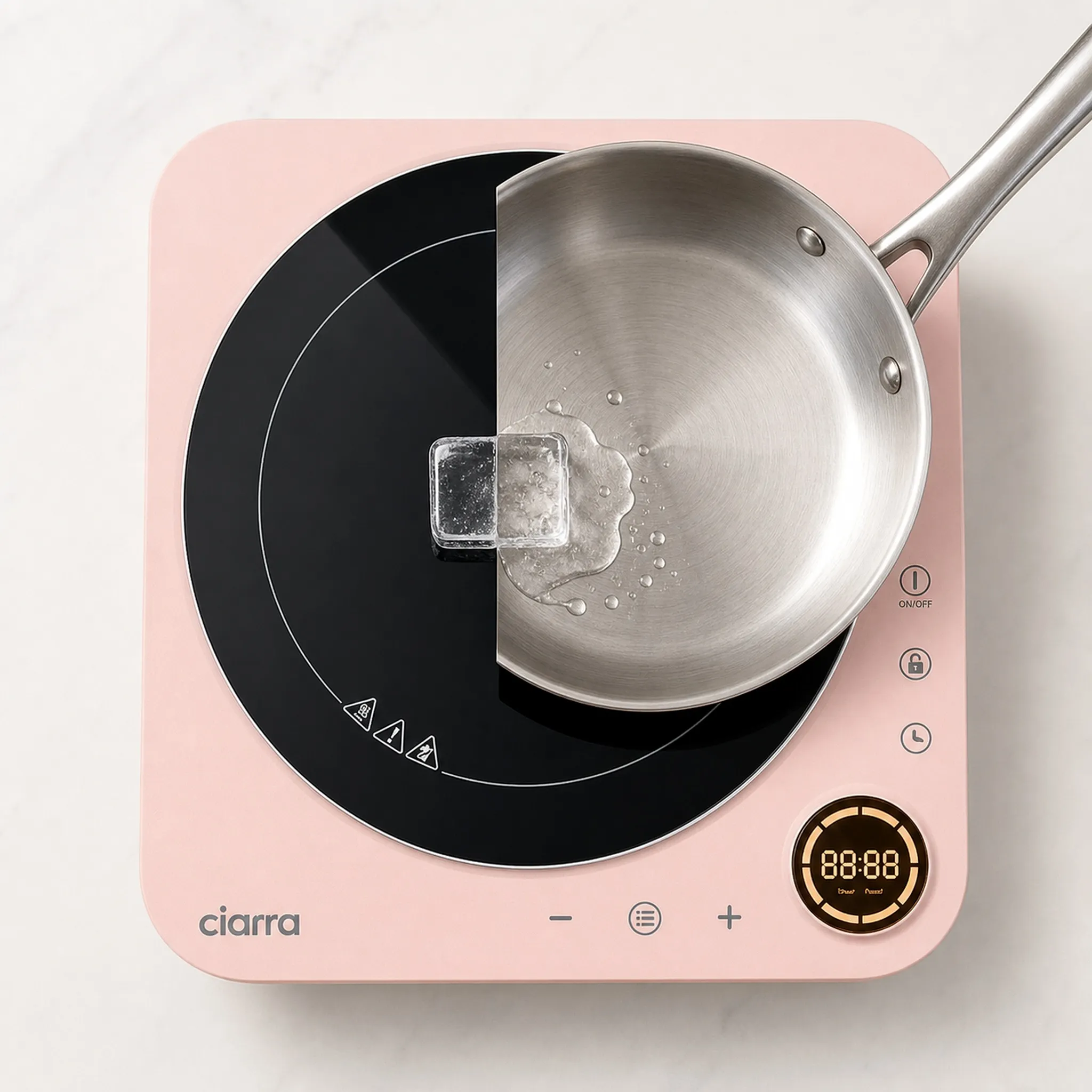
The explanation is straightforward: the glass surface itself does not directly produce heat.
It only becomes warm because:
The hot cookware transfers heat downward
Residual heat remains after cooking
Nevertheless, compared with gas burners or electric coils, the surface generally remains much cooler and cools down quickly after the pan is removed.
Most modern induction stoves also feature a hot surface warning indicator to provide additional safety.
Why Only Certain Cookware Works
Induction cooking requires ferromagnetic materials, which are materials capable of responding to magnetic fields.
Common cookware that is compatible includes:
- Cast iron
- Magnetic stainless steel
- Enamel-coated cast iron (Dutch ovens)
Materials that do NOT work include:
- Aluminum (unless specially layered)
- Copper
- Glass
- Non-magnetic stainless steel
A simple test commonly used by consumers is:
If a magnet sticks to the bottom of your pan, it will likely be compatible with an induction cooktop.
Induction Vs Electric Vs Gas Cooktop
Consumers frequently compare induction cooking with gas and conventional electric stoves. The main distinction lies in how heat is produced and transferred.
Gas Stoves
Gas stoves burn fuel to produce an open flame. The flame heats the cookware, but it also sends a significant amount of unused heat into the surrounding air.
Electric Coil Stoves
Electric stoves rely on resistive heating elements. Electricity first heats the coil, and the heated coil then transfers energy to the cookware. This indirect process leads to a slower response and greater energy loss.
Induction Stoves
Induction eliminates these intermediate steps. Through electromagnetic induction, energy moves directly into the cookware, so heat is generated within the pan itself rather than outside it.
| Type | How It Works | Efficiency | Key Benefit |
|---|---|---|---|
| Gas Stove | Burns gas to produce an open flame that heats the pan | ~35–40% | Strong flame control, but significant heat loss |
| Electric Coil Stove | Heats a metal coil, which then transfers heat to the cookware | ~70–75% | Stable heat, but slower response |
| Induction Stove | Uses an electromagnetic field to heat the pan directly | ~85–90% | Fastest heating, highest efficiency, precise control |
Performance Summary
Since induction transfers heat directly to the cookware, it substantially reduces energy loss.
Typical efficiency comparisons:
- Induction: ~85–90%
- Electric: ~70–75%
- Gas: ~35–40%
This results in:
- Faster boiling times
- More precise temperature control
- Less heat released into the kitchen
- Lower energy consumption
| Feature | Induction | Electric | Gas |
|---|---|---|---|
| Boiling Speed | Fastest | Medium | Slow |
| Heat Loss | Very Low | Medium | High |
| Temperature Control | Very Precise | Moderate | Moderate |
| Kitchen Heat | Minimal | Medium | High |
FAQs about the Working Principle of an Induction Cooker
What Frequency Do Induction Cooktops Use?
Typical household induction stoves operate at:
~20 kHz to 100 kHz (with tens of kHz being the most common range)
This frequency range represents a balance between:
- Efficient energy transfer
- Safe coil design
- Manageable electromagnetic interference
- Suitable penetration depth (skin effect control)
Do Different Cookware Types Affect Efficiency?
Yes, the type of cookware can significantly influence performance.
Key factors include:
Magnetic permeability (stronger = better coupling)
Electrical resistance
Thickness and geometry
General effects:
Cast iron → strong coupling, high heating efficiency
Magnetic stainless steel → good balance
Thin or weakly magnetic materials → weaker heating or unstable performance
However, most modern stoves are engineered to perform optimally within a relatively narrow range of “ferromagnetic cookware behavior.”
Does the Stove Adjust Frequency or Power for Different Pans?
Partially.
Most induction cooktops:
Do not make major dynamic frequency changes
Instead adjust:
- Power output
- Current amplitude
- On/off switching cycles
Advanced models may:
- Detect whether cookware is present
- Make slight adjustments to resonance conditions
- Shut down when the load falls outside the acceptable impedance range
However, they generally cannot fully adapt to every type of metal because of the added complexity and cost.
Why Don’t Aluminum and Copper Work Well, Even Though They Conduct Electricity?
Because electrical conductivity by itself is not sufficient.
The key missing element is:
Magnetic coupling
Aluminum and copper:
Produce eddy currents
But lack strong magnetic interaction
Do not provide the correct inductive load for the stove driver
Often lead to poor or unstable power transfer
Therefore, although heating is theoretically possible, household induction systems are not designed or optimized for these materials.
What is the Coil Orientation Inside an Induction Stove?
The coil is flat and horizontal, positioned beneath the glass surface
The magnetic field is directed vertically upward toward the cookware
This generates circular eddy currents within the bottom of the pan
Most designs do not use a magnetic core.
Could a Coil Placed on the Cooktop Create an Electric Shock Hazard?
In theory:
Yes, if a conductive loop (coil or metal object) couples strongly with the magnetic field
However, in practice:
Household induction systems are built with strict safety limits
There is no direct electrical path
Power is highly localized and controlled
The system generally shuts down when abnormal coupling is detected
Therefore, although induced currents are present, they are not directly accessible as a shock hazard during normal operation.
Final Thoughts: Why Induction Is Changing Modern Kitchens
Induction stoves reflect a move toward smarter, cleaner, and more energy-efficient home cooking.
By relying on controlled electromagnetic fields rather than combustion or resistive heating, they provide:
Faster performance
Higher energy efficiency
Improved indoor air quality
Greater cooking precision
For many U.S. households, induction cooking is becoming more than simply an alternative — it is increasingly viewed as a standard feature of modern kitchens.

CIARRA 36 Inch Built-in Induction Cooktop 5 Burners 9600W with Booster Flexzone CABIH365BFF-OW
Designed for modern kitchens, the CIARRA 36 Inch Built-in Induction Cooktop combines five cooking zones with a powerful 9600W output and Booster Flexzone functionality. It provides a spacious cooking surface for preparing multiple dishes while offering the convenience of induction cooking in a built-in design.


